The Uneven Ground Workout: Safe Outdoor Balance Steps for Seniors
ElderVoice Editorial Team
July 10, 2026 · Fact-checked against cited sources
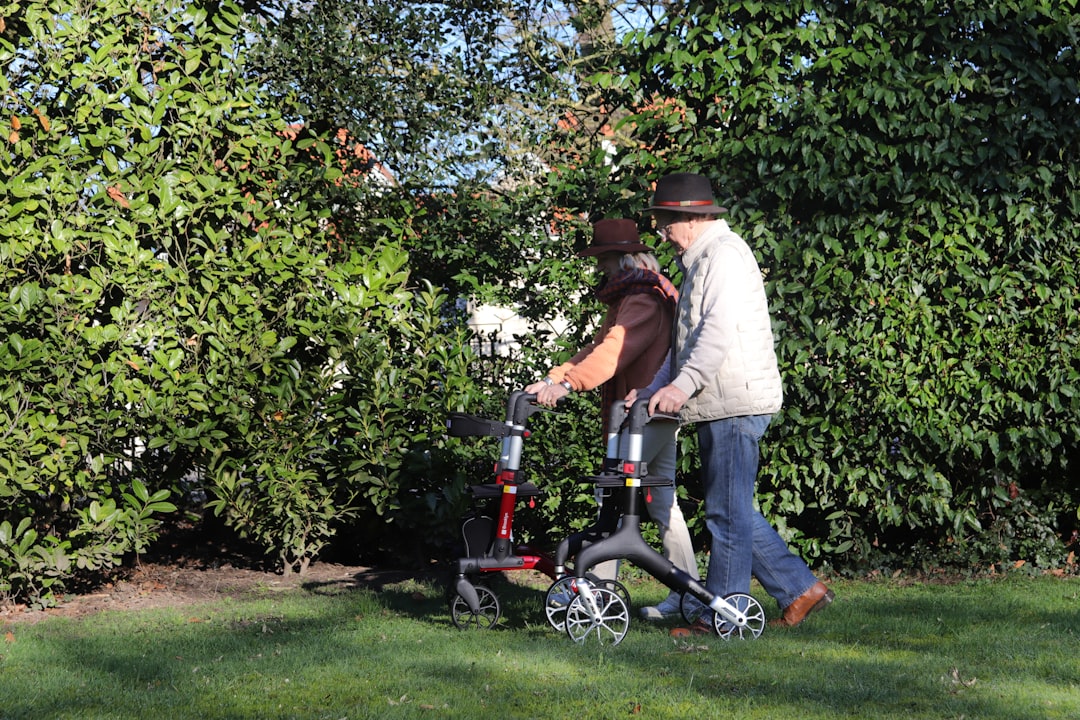
On June 11, 2026, researchers at Flinders University published a study that fundamentally changes how we look at how our parents walk. Published under the title "From speed to stability: how ageing changes the way we walk," the research revealed that as people age, their bodies naturally adopt a safety-first walking style. The body begins to prioritize stability over speed and energy efficiency. It is a protective, instinctive shift. If you have noticed your mother slowing down on the driveway, or your father staring intently at his feet as he walks across the backyard, you are seeing this shift in real time.
A few weeks later, on July 5, 2026, a report in SciTechDaily highlighted a major piece of this puzzle. The article, "Scientists Reveal the Best Exercises for Aging Joints," pointed out that the best way to protect aging joints and prevent falls is not by keeping seniors on perfectly flat, carpeted surfaces. Instead, exercising on varied, unstable surfaces like grass, gravel, or gentle dirt trails helps maintain our internal sense of position and improves postural control. Challenging balance in this way can reduce fall rates by roughly 23%.
But there is a catch. You cannot just take a parent who has spent the last six months walking on flat kitchen tile and walk them straight onto a sandy beach or a bumpy lawn. That is a recipe for a painful sprain or a dangerous fall. More than 1 out of 4 older adults aged 65 and older fall each year, and having just one fall doubles the likelihood of falling again, according to 2024 data from the Centers for Disease Control and Prevention (CDC). To get your parent back outside safely for summer barbecues, garden visits, and park strolls, you need a systematic, step-by-step way to transition them from flat floors to uneven ground.
The physics of why flat floors do not prepare us for the real world
Our homes are full of flat surfaces: linoleum, hardwood, low-pile carpet, and smooth tile. When a senior spends nearly all of their time indoors, their brain and muscles get lazy. They do not have to work to keep the body upright because the ground never changes. The brain stops paying close attention to the sensory signals coming from the soles of the feet.
This internal awareness is called proprioception. It is our body's built-in GPS. When your parent steps onto grass, gravel, or sand, that GPS has to fire at lightning speed. The ground is suddenly sloping, dipping, or shifting underfoot.
Occupational therapist and author A. Salzman explains this mechanics clearly in an article on proprioceptive rehabilitation:
If those quick muscular responses are slow or weak, the risk of a fall skyrockets. This is not just about the ankles, either. The weakness travels upward.
Christopher Travers, an exercise physiologist at the Cleveland Clinic, warns of the chain reaction that happens when our foundation is weak: "If you make alterations at your base (your feet and ankles) you'll affect the rest of your joints. One of the greatest worries about a weak base is the effect it has on your knees and how much internal rotation it puts into your hip. If you're deficient at the bottom, the joints and muscles in your knees and hips can weaken as well."
This explains a common scenario that many family members experience. You might have a parent who can walk half a mile on a flat treadmill at the local gym, but when they try to walk down a simple outdoor sidewalk, they slow to a crawl and look terrified. The treadmill is predictable. The sidewalk, with its tiny tree-root swells, concrete cracks, and subtle inclines, demands a level of ankle stability and rapid muscular correction that the treadmill simply does not train.
To fix this, we have to target the specific muscles responsible for side-to-side corrections. Physical therapists refer to this as the ankle strategy. Specifically, we need to strengthen the gastrocnemius (the calf muscle) and the tibialis anterior (the shin muscle). These muscles work in tandem to correct our center of gravity when we sway forward, backward, or sideways. When we train these muscles on unstable surfaces, we are performing sensorimotor training. This training combines physical movement with sensory feedback, forcing the brain and the ankles to talk to each other much faster.
Why balance training is still highly effective at age 83 and beyond
Many adult children wonder if it is simply too late to help their parents. If a parent is 83, 88, or even 92, and they have started stumbling or refusing to go outside, is there any point in trying to train their balance? The short answer is yes. It is absolutely not too late.
A major research analysis of nearly 8,000 older adults conducted by Tufts University in 2023 demonstrated that structured balance and functional exercises reduce the overall rate of falls by 24%. Furthermore, a 2026 systematic review and meta-analysis published on ResearchGate showed that combining sensory-motor training with balance interventions significantly improved dynamic balance and self-reported ankle stability. The study measured a substantial improvement in dynamic balance (Cohen's d = 0.30) and an even greater improvement in self-reported ankle stability (d = 0.53) in people experiencing balance issues.
This improvement happens because balance in older age is less about building massive, bulky muscles and more about the speed of the neural loop. Your parent's nervous system remains adaptable throughout their entire life. When we challenge their balance in a controlled environment, we are rebuilding the neural pathways between the brain, the spinal cord, and the feet. We are teaching the nervous system to react faster to a slip or a dip.
This concept of real-world physical adaptability has even led to some surprising trends. For instance, a July 5, 2026, article in Business Insider titled "Parkour for Seniors Helps Prevent Falls, Build Strength, Confidence" profiled classes tailored for older adults in their 50s to 70s. These classes do not involve jumping off rooftops. Instead, they focus on navigating low obstacles, recovering balance mid-step, and learning how to fall safely on different surfaces. Experts noted that adapting these dynamic principles improves lower-limb strength and environmental awareness.
You do not need to sign your 85-year-old mother up for a parkour class, but the underlying science is the same: the human body can learn to negotiate obstacles and uneven ground at almost any age, provided the training is progressive and safe.
The indoor-to-outdoor progressive training plan
This four-step balance and mobility exercises for seniors program is designed to be done at home. It starts on safe, flat indoor floors and slowly introduces instability, preparing your parent's ankles and brain for the real world.
Before starting, make sure your parent is wearing supportive, flat, closed-toe shoes. Do not let them do these exercises in loose slippers or socks. If your parent has a history of severe falls, consult their physical therapist before beginning. Always stand close by to act as a spotter.
Step 1: The kitchen counter ankle builder
We begin on a flat, solid floor right next to a sturdy kitchen counter for hand support. The goal here is to wake up the shin and calf muscles and practice the basic ankle strategies.
- Double-leg heel raises: Have your parent stand tall, holding the counter with both hands. Slowly lift the heels, rising up onto the balls of the feet. Hold for two seconds, then slowly lower. Repeat this 8 times. This strengthens the gastrocnemius.
- Shin splint lifts (toe raises): Standing in the same position, have them rock back onto their heels, lifting their toes off the floor. Hold for two seconds, then lower. Repeat 8 times. This targets the tibialis anterior, which is the key muscle for preventing toe-tripping.
- The lateral sway: With feet hip-width apart and hands hovering just above the counter, have your parent slowly shift their entire body weight to the right foot, then to the left. They should feel their ankle muscles tensing and relaxing to keep them upright. Do this side-to-side sway for 60 seconds.
Step 2: The soft surface simulation
Once your parent can perform Step 1 with minimal hand support, it is time to simulate uneven ground while still inside the safety of the home. For this, you will need a low-profile foam balance pad, a folded yoga mat, or even a firm, flat couch cushion placed on the floor next to the kitchen counter.
- The foam pad stand: Have your parent step onto the foam pad or folded mat with both feet. The soft surface will immediately mimic the feel of soft grass. Have them try to stand still for 30 seconds, using the counter for touch support only if they wobble.
- The weight shift on foam: While standing on the soft surface, have them slowly shift their weight from their heels to their toes, and then from side to side. Because the surface is squishy, their ankles will have to make those tiny, rapid inversion and eversion corrections that A. Salzman described. Repeat this for 60 seconds.
- The cognitive challenge: To turn this into a true sensorimotor exercise, ask your parent to stand on the foam pad while naming as many fruits as they can in 30 seconds. Adding a mental task forces the brain to automate the balance corrections, which is exactly what needs to happen when they are walking outside and talking to a friend.
Step 3: The flat lawn transition
Now we finally head outdoors, but we keep it highly controlled. Find a patch of flat, well-maintained lawn. Avoid areas with visible holes, molehills, or hidden roots. Ensure your parent is well-hydrated before heading out, especially in the summer heat, as dehydration can cause sudden drops in blood pressure and dizziness. If you struggle to keep them drinking enough, you might find some helpful ideas in our guide on how to hydrate an elderly parent who refuses water.
- The static grass stand: Have your parent stand on the grass, holding your arm or a sturdy patio chair for initial support. Let them feel how different the grass is compared to the hard kitchen floor. Have them release their grip and try to stand independently for 30 seconds.
- The high-traction march: Slowly walk hand-in-hand across the flat grass. Encourage them to lift their knees slightly higher than normal. According to National Institute on Aging (NIA) guidelines, walking on grass can actually be a safer, higher-traction alternative when paved concrete sidewalks are slippery or badly cracked, as long as the grass is flat. Walk for 2 to 3 minutes, pausing frequently.
Step 4: The multi-terrain negotiation
This is the final stage of training, designed for seniors who have built up significant confidence and ankle strength. This step should always be done with a caregiver walking alongside them.
- The gravel path glide: Find a flat path with small, packed gravel. Walking on packed gravel requires the foot to constantly adapt to tiny, rolling stones. Walk slowly for 50 feet, focusing on keeping a wide base of support (feet slightly wider than hip-width).
- The sand shift: If you are near a park with a dry sandy area, or a beach, practice standing in dry sand. Sand is the ultimate test of ankle stability because it shifts completely under weight. Practice simple standing weight shifts in the sand for 30 to 60 seconds while holding your arm.
- The transition step: Practice walking from a hard concrete patio directly onto the grass, and then back onto the concrete. The moment of transition—where the surface density suddenly changes—is a common trip point. Practice this boundary crossing 5 times.
Gear and strategies for safer backyard exploration
While physical training is the long-term solution, using the right equipment can make an immediate difference in safety and confidence. Many families make the mistake of using indoor mobility gear for outdoor excursions, which can lead to scary situations.
Consider this common scenario shared on the r/AgingParents forum: A caregiver explained that their 150-pound father loved walking around their grassy property on weekends. However, his standard indoor walker, which had small, five-inch plastic wheels, constantly got stuck in small grass dips and dirt bumps. It would suddenly stop, nearly causing the father to tip forward over the frame.
Standard walkers and rollators are designed for smooth, flat surfaces like linoleum and low-pile carpet. When you take them onto grass or gravel, those tiny wheels sink into the dirt. To solve this, look for all-terrain rollators. These specialized walkers feature much larger wheels—usually 10 to 12 inches in diameter—often made of rubber or filled with air. They roll smoothly over lawn bumps, gravel paths, and park trails without catching or tipping.
Another common outdoor challenge involves sitting down. Another caregiver on an aging forum shared a distressing story about their mother, who lived with Parkinson's disease. During a family gathering, the mother sat down directly on the grass to be close to the kids. When it was time to go inside, she realized she had absolutely no leg or core strength to pull herself back up to a standing position from ground level. The uneven, soft turf made it impossible to get leverage, and it took two adults to safely assist her to her feet.
Sitting at ground level on uneven surfaces is highly challenging. If your parent wants to enjoy the backyard, always provide a sturdy patio chair with firm armrests and a high seat. Avoid low, squishy lawn chairs or folding canvas chairs, which can sink into the grass and leave your parent trapped.
Additionally, pay close attention to your parent's medications. Many common prescriptions for blood pressure, allergies, or sleep can cause orthostatic hypotension (a sudden drop in blood pressure when standing up) or general drowsiness, both of which degrade balance. If your parent is taking multiple medications, it is wise to keep an updated list and review it regularly with their doctor. You can read more about managing these schedules in our article on setting up safe AI medication systems, and learn how to safely clean out old prescriptions with our guide on safe medication disposal.
How can I help my parent rebuild their outdoor confidence?
The fear of falling is often just as disabling as a physical injury. When an older adult feels unsteady on their feet, their world begins to shrink. They start declining invitations to family picnics, they stop going out to get the mail, and they stay inside where the floor is predictable. This isolation can set in quickly. If your parent is also dealing with seasonal allergies, they might use that as an excuse to avoid the outdoors entirely, though you can help manage those symptoms by checking out our guide on minimizing senior spring allergies.
Rebuilding that confidence requires patience, consistency, and a gentle touch. Here are four ways to help your parent overcome the mental hurdle of walking on uneven ground:
- Never rush them: As many experienced caregivers note, trying to hurry someone who uses a walker or walks slowly is a recipe for a fall. When we rush a senior, their anxiety spikes, their muscles tense up, and they lose their focus on the ground. Always allow twice as much time as you think you need for outdoor walks.
- Keep walks short and successful: It is much better to have a highly successful three-minute walk on the grass than a stressful ten-minute walk that ends in extreme fatigue. End the walk while your parent still has energy left in the tank. This leaves them with a positive memory of the experience, making them much more willing to try again next time.
- Frame it as a partnership: Do not make these exercises feel like a chore or a medical treatment. Instead, frame them as a joint activity. You can say, "Hey Dad, I read about these quick ankle exercises that help with joint stiffness. Let's do them together before we head out to the patio."
- Celebrate the small victories: Did they walk to the edge of the driveway today without holding your arm? Did they stand on the grass for 30 seconds without wobbling? Acknowledge these moments. Positive reinforcement builds real, lasting confidence.
Improving balance is a subtle process, much like making small modifications around the home. It is about quietly building safety into their daily life without making them feel managed or fragile. We often talk about this approach when we discuss home modifications, such as in our guide on stealth-proofing a senior's bathroom without industrial grab bars. You can apply that same philosophy to physical training—making it a natural, non-intrusive part of their routine.
For families who worry about their parent's safety when they are home alone, a phone-based check-in service like ElderVoice can provide great peace of mind. While it is not a physical mobility tool, our friendly, automated phone calls can check in on your parent throughout the day to ensure they are feeling steady, remind them of their medications, and alert you immediately if something feels off.
Ultimately, the goal of the uneven ground workout is not to turn your parent into an athlete. It is about helping them reclaim the simple, quiet joys of life: the feeling of warm grass underfoot, the smell of backyard soil, and the freedom to walk out to the garden swing on a beautiful summer afternoon.
Frequently asked questions
Is it safe for an 80-year-old parent to practice walking on grass if they already use a walker?
Yes, but you should never start directly on uneven ground. Begin with ankle-strengthening exercises indoors on a flat hardwood floor first. When they are ready to transition outside, use an all-terrain rollator with large, air-filled tires instead of a standard small-wheeled walker, and stay within arm's reach to act as a spotter.
How ElderVoice can help your family
ElderVoice makes friendly AI phone calls to your parent for wellness checks, medication reminders, and real conversation — on any phone, with no app or Wi-Fi to set up. Explore our daily check-in calls, or start a free trial today.
Sources
- Preventing Falls in Older Patients (2024)
- Exercise Can Help Decrease Fall Risk in Older People (2023)
- From speed to stability: how ageing changes the way we walk (2026)
- Scientists Reveal the Best Exercises for Aging Joints (2026)
- Parkour for Seniors Helps Prevent Falls, Build Strength, Confidence (2026)
- The Best Exercises for Seniors to Maintain Strength, Balance and Independence (2026)